
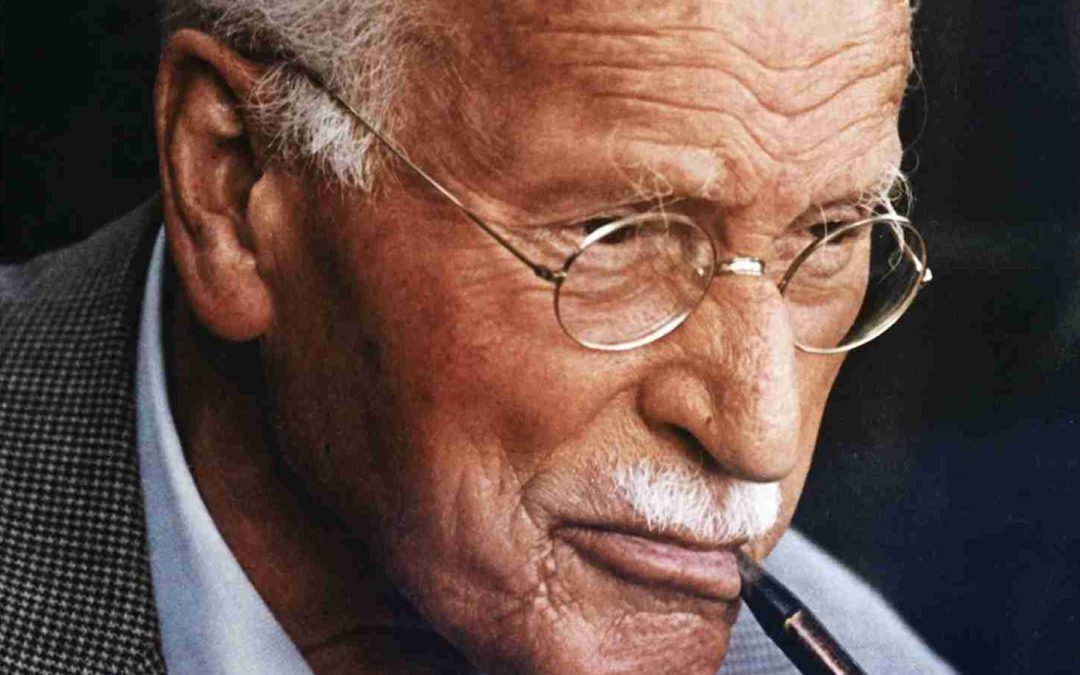
Carl Jung is one of the most influential figures in the history of psychology, and his theory of the collective unconscious is one of the ideas clients ask me about most. Jung began his career as an early supporter of Freud, drawn together by a shared fascination with the unconscious mind, and became an active member of the Vienna Psychoanalytic Society before eventually breaking away to develop his own distinct framework.
Where Freud focused mainly on the personal unconscious — the repressed memories and experiences unique to each of us — Jung proposed something broader. He also believed personality is, in part, a kind of performance. The Latin word persona literally means “mask,” referring to the roles we adopt depending on who we’re with and what a situation calls for.
The Collective Unconscious
Jung’s most enduring contribution is the concept of the collective unconscious — a layer of the psyche that isn’t shaped by personal experience alone, but inherited and shared by all humans. Where the personal unconscious holds the material of one individual’s life, the collective unconscious holds patterns that show up again and again across cultures, histories, and generations.
The contents of the collective unconscious are known as archetypes: unlearned, universal tendencies to perceive, feel, and respond to certain situations in remarkably consistent ways, regardless of where or when a person was raised.
Archetypes
Archetypes surface again and again in dreams, myths, religious traditions, and art across otherwise unrelated cultures. Jung took this as evidence that certain psychological patterns are simply part of being human, rather than something each of us invents on our own. In therapy, recognizing an archetype at work can be genuinely clarifying — it can turn a confusing, isolating experience into something a client can suddenly see the shape of.
The Persona
The persona is the social mask we present to adapt to different environments — the version of ourselves we bring to work, to family gatherings, to a first date. It serves a real purpose: none of us could function if every private thought and feeling were on display all the time. But Jung was clear that trouble starts when we over-identify with the persona and mistake the mask for the whole of who we are. Clients who have spent years excelling at a role — provider, caretaker, high performer — often arrive in therapy discovering they have lost touch with what is underneath it.
The Self
The Self, in Jung’s framework, represents the integration of the conscious and unconscious mind — not the ego, but the organizing center of the whole personality. Jung often symbolized the Self as a circle or mandala, an image of wholeness rather than division.
Reaching toward that wholeness is what Jung called individuation: a lifelong process of becoming more fully, consciously yourself, rather than a fixed destination. It is rarely comfortable work, but it is often where the most meaningful change happens.
The Shadow
The shadow holds the parts of ourselves we have rejected, hidden, or simply never been allowed to develop — instincts, desires, and traits that do not fit the image we would like to project.
In my own work with clients, shadow material rarely announces itself directly. It shows up sideways: in the qualities we cannot stand in other people, in reactions that feel bigger than the situation calls for, in the parts of a story someone glosses over without quite noticing. Jung’s view was that we do not get rid of the shadow by ignoring it — we grow by acknowledging it and bringing it into conscious awareness.
The Anima and Animus
Jung also wrote about the anima and animus — his terms for the feminine qualities present in men and the masculine qualities present in women. He believed that recognizing and integrating these opposing qualities, rather than rejecting them, was an important part of psychological balance.
This is one of the more dated corners of Jung’s work — few clinicians today would frame femininity and masculinity in such fixed terms — but the underlying idea still holds up. Real growth often means making room for qualities we have written off as “not like me.”
Why Jung Still Matters
A century after Jung was writing, his ideas still show up constantly in modern psychology, personal development, and even in the language we use to talk about ourselves. Persona, shadow work, and individuation have all made their way into everyday conversation, often without anyone realizing where the terms came from.
I draw on Jungian concepts often in my own practice, not as a rigid system, but as a way of giving language to patterns clients sense in themselves before they can quite name them. Noticing the difference between the mask you show the world and what is happening underneath it, or noticing what you cannot stand in someone else and wondering what it says about you — these are Jungian ideas at work, whether or not anyone calls them that. If you would like to explore this kind of insight-oriented, Jungian-informed therapy directly, I encourage you to reach out.
Further Reading
Denver Breakthroughs offers online therapy for adults in Colorado and Florida, focusing on insight, self-understanding, and meaningful change.
Get Started